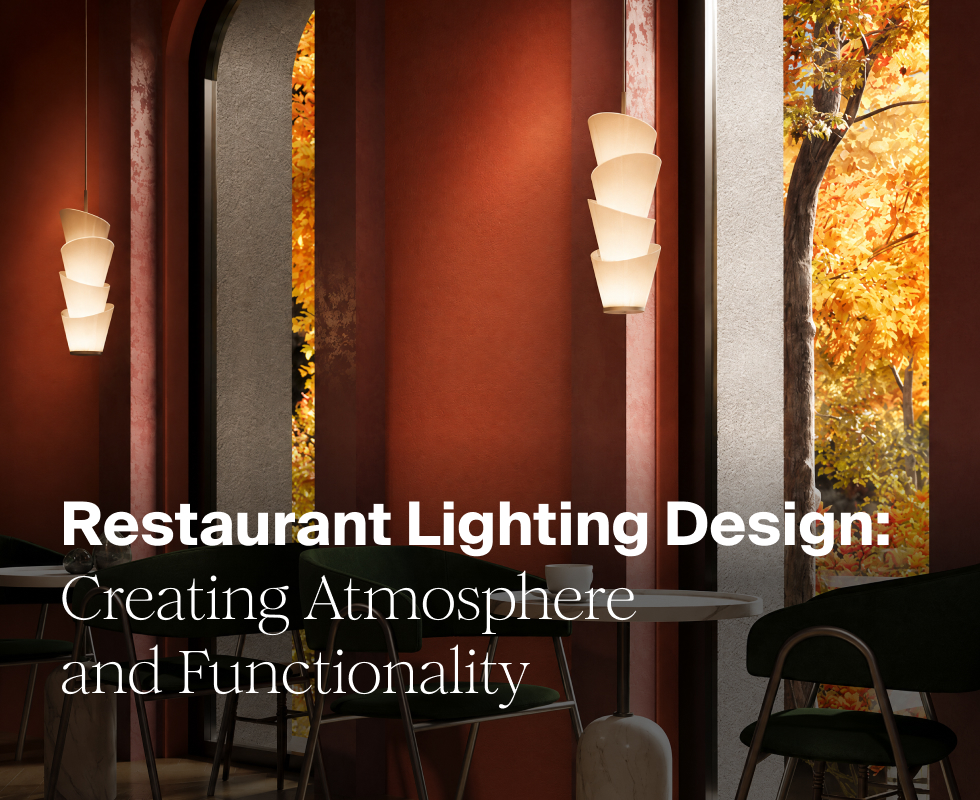
Restaurant lighting has to work for guests and staff at the same time. It should help people read menus, recognise food and move safely, while supporting the restaurant's identity and intended mood. A flexible, layered scheme is often more effective than relying on a single bright ceiling layer.
Design around the dining experience
Begin with the restaurant's concept, service style and operating patterns. A quick-service venue has different needs from a quiet dining room, bar or all-day hotel restaurant. Map tables, service routes, entrances, waiting areas, counters and any focal points such as an open kitchen or feature wall.
Think about the view from a seated position. Exposed bright sources, reflections in glassware or glare from polished surfaces can distract guests. Review sightlines and sample the scheme at the height and distance at which people will experience it.
Layer the light
- Dining tables. Focused pendants or carefully aimed accent light, balanced with ambient light. Allow menus and food to be seen without dazzling seated guests.
- Circulation / entrance. Even, comfortable general illumination with clear orientation. Avoid abrupt contrasts and obscured changes in level.
- Bar / counter. Decorative lighting combined with dedicated task light. Give staff enough usable light for preparation and payment tasks.
- Food preparation / service. Task-oriented lighting suited to the actual work area. Check hygiene, cleanability and applicable workplace requirements.
- Day / evening scenes. Use separate zones and dimming where compatible. Maintain visibility for service as the atmosphere changes.
Ambient lighting provides a base level of visibility. Pendant lights from Maytoni's collection can establish a focal point over tables, counters or communal areas, while wall lamps add warmth and visual rhythm. For a product example, see the Orotte pendant luminaire, MOD520PL-01BS. Accent lighting can draw attention to artwork, materials or architectural details. Task lighting is important behind the bar, at service stations and in food-preparation areas.
Choose colour and distribution thoughtfully
What colour temperature works best in a restaurant? Warm-white light, often around 2700–3000K, is a common starting point for intimate dining areas. It is not a rule: the menu, interior materials, daylight and desired atmosphere should determine the final choice. Check colour rendering independently of colour temperature and test the sources on food and finishes.
How can glare be reduced at dining tables? Consider shielding and diffuser design, position luminaires out of typical seated sightlines, avoid uncomfortable reflections in glassware and verify the effect at table height. Lowering brightness alone may not solve a poorly aimed or exposed source.
Light changes how food, finishes and faces appear. Review colour characteristics against the materials and menu presentation, and avoid selecting a lamp based on a single number without considering the full scheme. Beam spread and aiming also matter: a narrow pool of light can create intimacy, but excessive contrast may make movement or menu reading difficult.
Use controls to support different moments
Restaurants may need different scenes for daytime service, dinner, cleaning, private events or closing. Define these scenes with the operator and keep controls straightforward. Confirm compatibility between luminaires, drivers and control equipment, and decide who will commission the system.
Make the scheme practical to operate
Consider cleaning, access, replacement parts and the effect of maintenance on service. Select luminaires that fit the environment and are appropriate for their location, especially in areas exposed to heat, moisture or frequent cleaning. Coordinate decorative luminaires with sprinklers, ventilation, acoustic elements and other ceiling services.