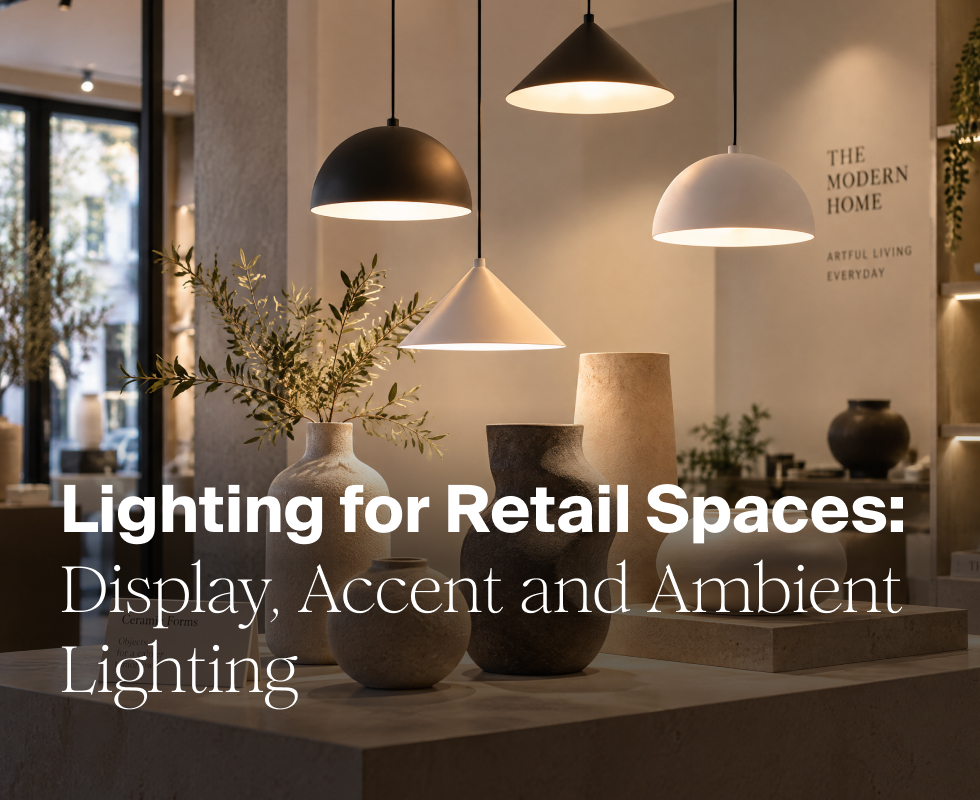
Retail lighting helps customers navigate a store, compare products and understand the brand's visual character. A strong shop lighting design combines ambient, accent and display lighting, while allowing the team to adapt the scheme as merchandise and layouts change.
Begin with the customer journey
Map the entrance, main circulation routes, featured displays, fitting rooms, service counters and checkout. Identify where customers should pause, what they need to see clearly and how staff use the space. Lighting can guide attention, but it should not obstruct wayfinding or create uncomfortable contrast.
Balance the lighting layers
Ambient lighting establishes general visibility and supports comfortable movement. Accent lighting creates emphasis around selected displays, products or architectural features. Track lighting can be useful when aiming needs to change, while dedicated display luminaires may suit shelves, showcases or counters. The right combination depends on the store layout and merchandise.
Use contrast intentionally. A brighter display can draw attention, but excessive contrast may make surrounding areas difficult to navigate. Watch for glare on screens, glossy packaging, mirrors and glass cases. Aim luminaires carefully and assess the result from customer viewpoints.
Choose colour and optics for merchandise
- Fashion boutique / fitting room. Present fabrics and skin tones accurately, reduce mirror glare. High-quality ambient light plus carefully positioned adjustable accents.
- Furniture or design showroom. Reveal textures, form and featured displays. Layered general illumination and directional track or display lighting.
- Grocery / food display. Make produce and labels readable without misrepresenting colour. Suitable colour rendering, controlled optics and task-specific equipment.
- Shop window / promotional display. Attract attention from the street while maintaining visual comfort. Adjustable accent lighting coordinated with daylight and viewing distance.
- Checkout / service desk. Help staff and customers read, scan and transact. Reliable task illumination and glare-controlled ambient lighting.
Verify the selected optics, colour characteristics and output against the merchandise and each project’s requirements.
Light affects how colours and materials are perceived. Review the selected sources with representative products and finishes rather than assuming one setting suits every category. Check the colour characteristics and beam distribution in the actual product documentation. For fashion, food, cosmetics or art, the appearance of merchandise may be particularly important to the buying experience.
Keep the layout adaptable
Retail environments change frequently. Maytoni's track-systems catalogue includes EXILITY magnetic track systems; one product example in this system is the Points EXILITY track luminaire. Track systems and adjustable luminaires can make it easier to retarget light as luminaires and product displays move, provided the selected components are compatible and the system is properly installed. Consider how staff will make adjustments and whether the store needs separate zones or scenes for opening, trading hours and cleaning.
Coordinate luminaires with ceiling services, signage, sprinklers and visual merchandising elements. Plan for safe access and maintenance, and document the aiming and control settings so that changes can be made consistently.