Architectural façade lighting can reveal texture, emphasise form and help a building remain legible after dark. The best approach starts with the architecture itself. A lighting effect that works on stone may look harsh on glass or smooth cladding, so luminaire selection and placement should respond to the material, geometry and surrounding context.
Choose the effect before the luminaire
Common façade lighting approaches include:
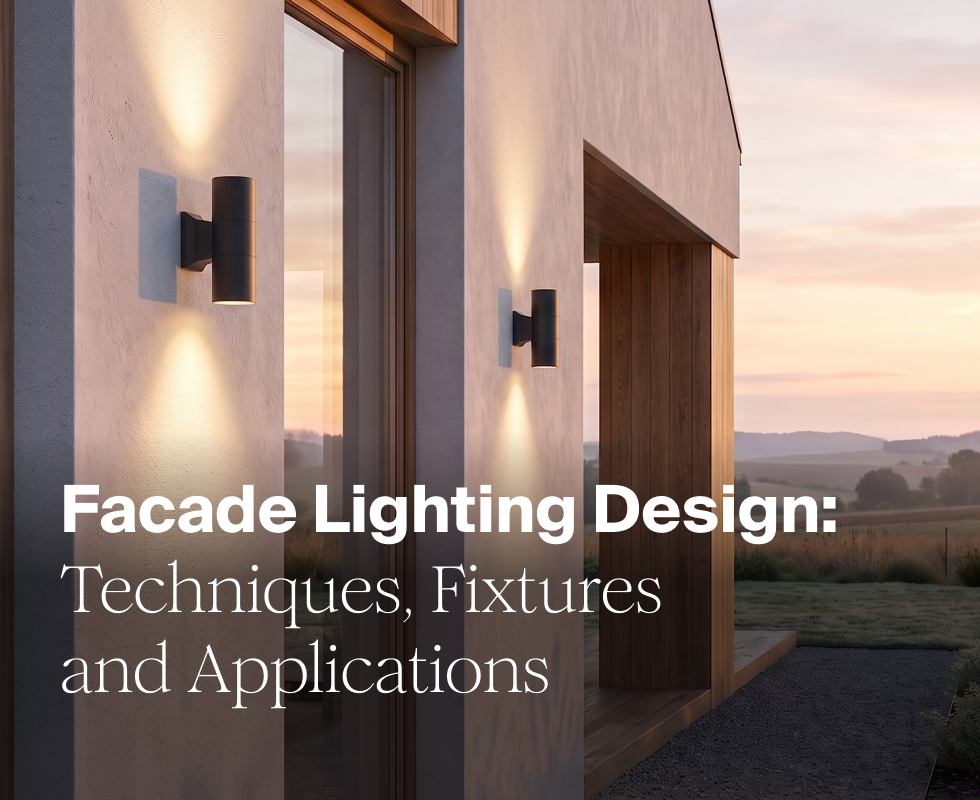
- Grazing: placing light close to a textured surface so shadows reveal relief and detail.
- Washing: lighting a broader surface more evenly to create a calm, uniform appearance.
- Accent lighting: directing focused light toward a column, entrance, sign or architectural feature.
- Silhouette or outline effects: using light to make a shape or edge stand out against a darker background.
Study the façade in context
Review elevations, material samples and surrounding views. Note windows, balconies, recesses, signage, landscaping and places where luminaires might be visible. Consider how the building looks from different distances and angles. A scheme that reads well from the street may create glare for occupants or neighbours if sources are exposed.
For textured materials, grazing can create dramatic shadow, but it may also exaggerate irregularities. A broader wash can be more appropriate for a smooth façade, though careful spacing and aiming are needed to avoid scallops or uneven brightness. Mock-ups are particularly useful when materials or viewing conditions are uncertain.
Select luminaires and optics carefully
Choose luminaires for the required distribution, environmental exposure, mounting method and maintenance access. Maytoni's outdoor wall-lamp category includes luminaires such as the Dusk outdoor wall luminaire, O183WL-L13BK; assess each product's beam, mounting and technical data against the façade task. Dedicated outdoor architectural lighting may provide more controlled beam options for façades and structural details. Check optical accessories, shielding and aiming adjustments where available.
Confirm ingress protection, material suitability, electrical requirements and installation details for the location. Coordinate cable routes and mounting brackets with the building envelope team to protect both the visual result and the construction detail.
Manage colour, controls and spill
What is the best lighting technique for a building façade? There is no single best technique. Grazing can reveal relief on stone or brick; washing can provide a more even treatment for broad, smooth surfaces; and accent lighting can highlight entrances, columns or details. Select the approach from the façade material, geometry, viewing distance, nearby windows and local restrictions, then test it on the actual building.
Colour appearance should be consistent across the façade unless variation is an intentional part of the design. Confirm the colour characteristics of the selected products and review them on the actual materials. Controls can support schedules, seasonal use or different operating modes, but scenes should be simple to operate and maintain.
Limit light spill beyond the building. Consider nearby homes, roads, habitat and the night sky, and follow local requirements for exterior lighting. A visually striking scheme should not rely on excessive brightness.